Overview
OnePlusOne is the startup I decided to co-found with two friends, at the beginning of 2024. At the time, we were all in different companies and places in the world, but we all wanted to build something together again. One of us had been working in the Partnerships space for quite some time, and really felt that there was a gap in the market and that together we could build something great.
Finding the problem
Partner managers can easily connect with other partners and explore potential partnerships. However, these processes tend to not gain much traction and lift off the ground because of the lack of a centralised and connected workspace where they can manage and grow a successful partnership.
We wanted to build this platform, but after a couple of months of research and an initial MVP, we realised that we needed to pivot to a different problem. Partner managers would be excited about the idea, but wouldn't have the discretionary budget to allocate to a new platform, or in the case where they did, this process would be slow, with commitments to trial only in a year's time.
We started looking for a problem we could solve, right now, and immediately identified recruiting. We had all been involved in the recruiting process in one way or another, and we all felt we could leverage the power of AI to solve the issues we all experienced.
What we built
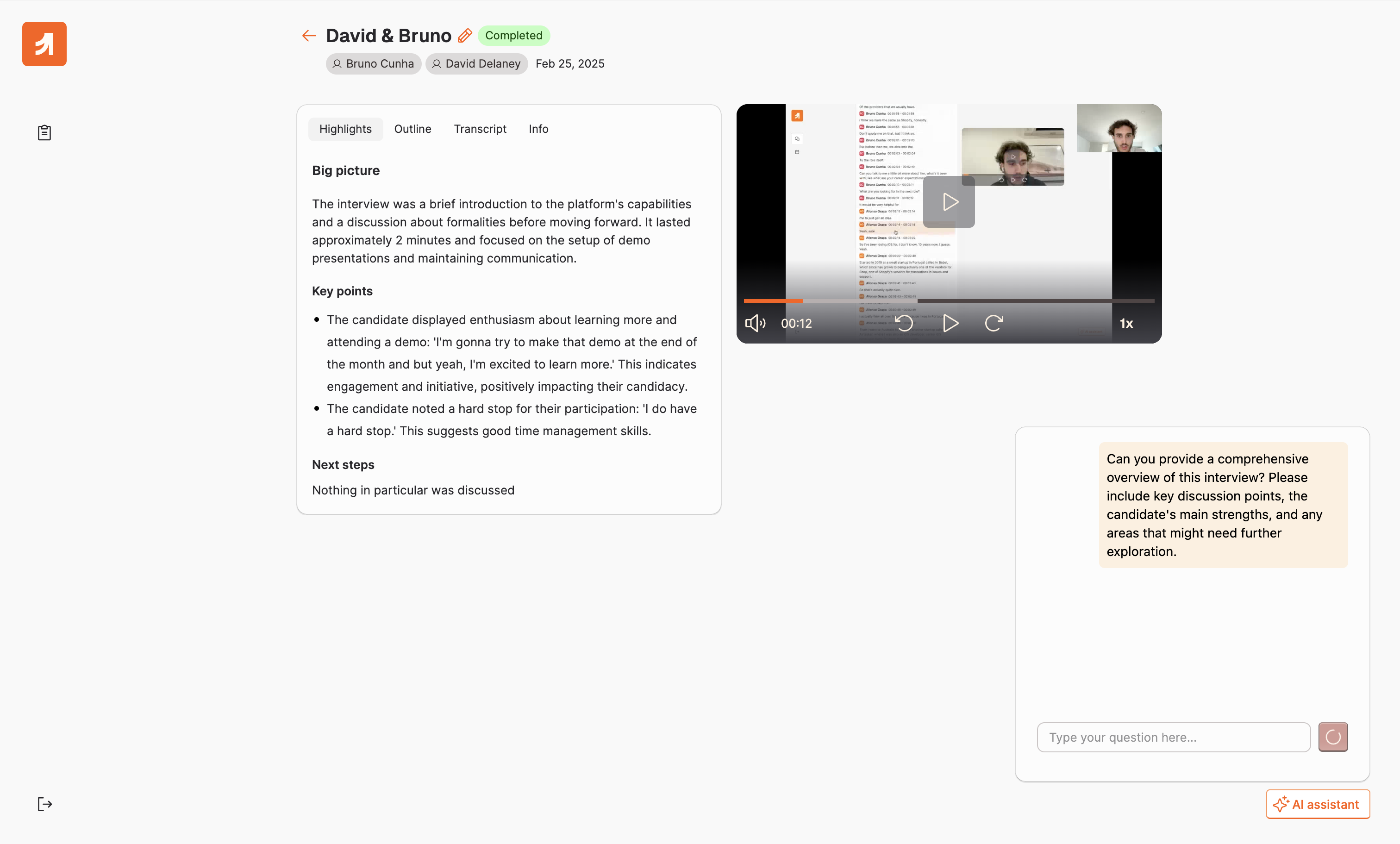
Having already built an MVP for the Partnerships platform, we were able to quickly iterate on the recruiting platform. We built an assistant that records and transcribes interviews. The interviewer can go into the platform, re-watch the interview, go through the transcript, and chat with an assistant about the candidate. The assistant can answer pre-established questions about the candidate and surface moments it considers key to the candidate's fit for the role. To make this more seamless, we also integrate with the interviewer's calendar to allow them to add the assistant to all the interviews they want it to sit in on.
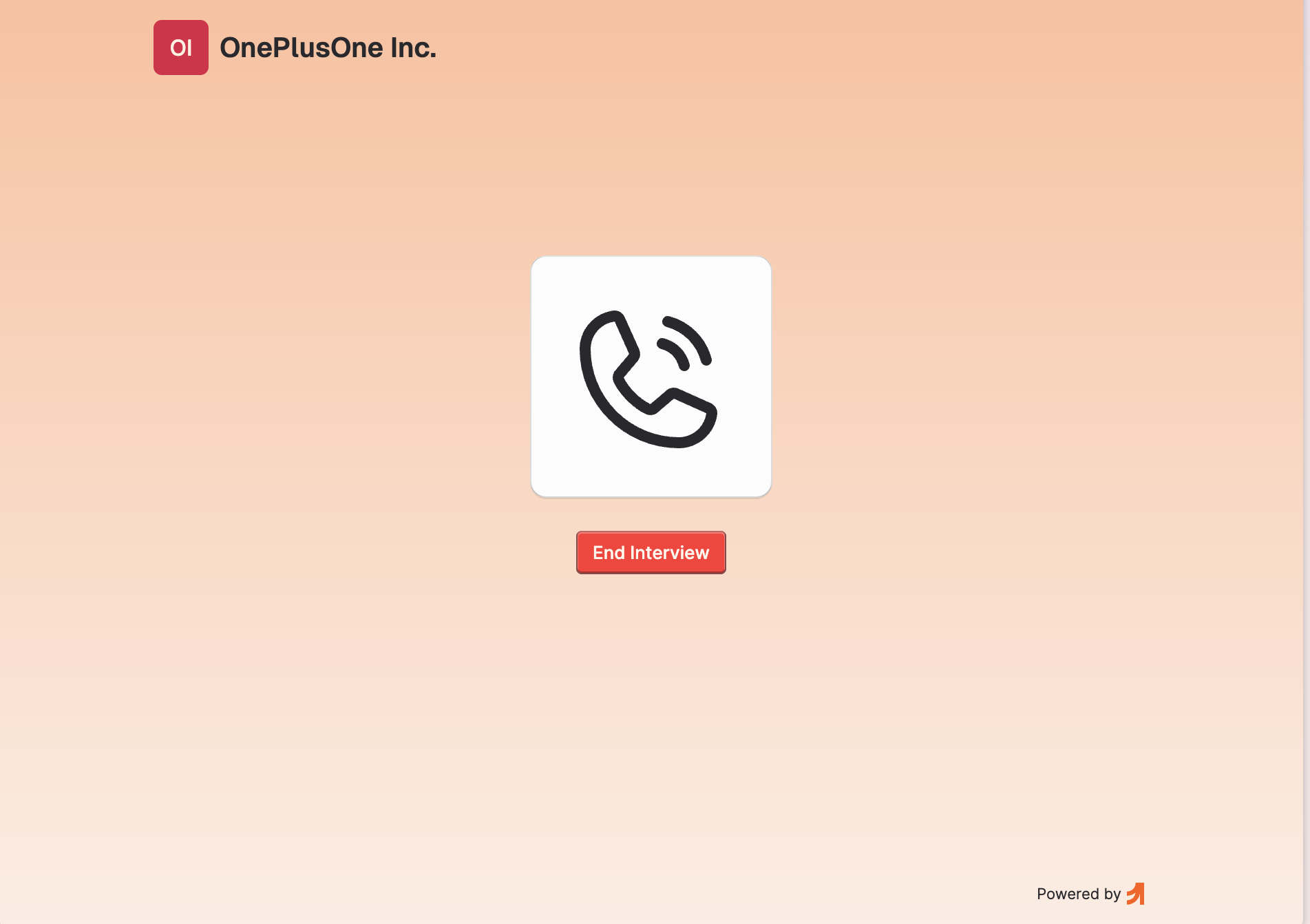
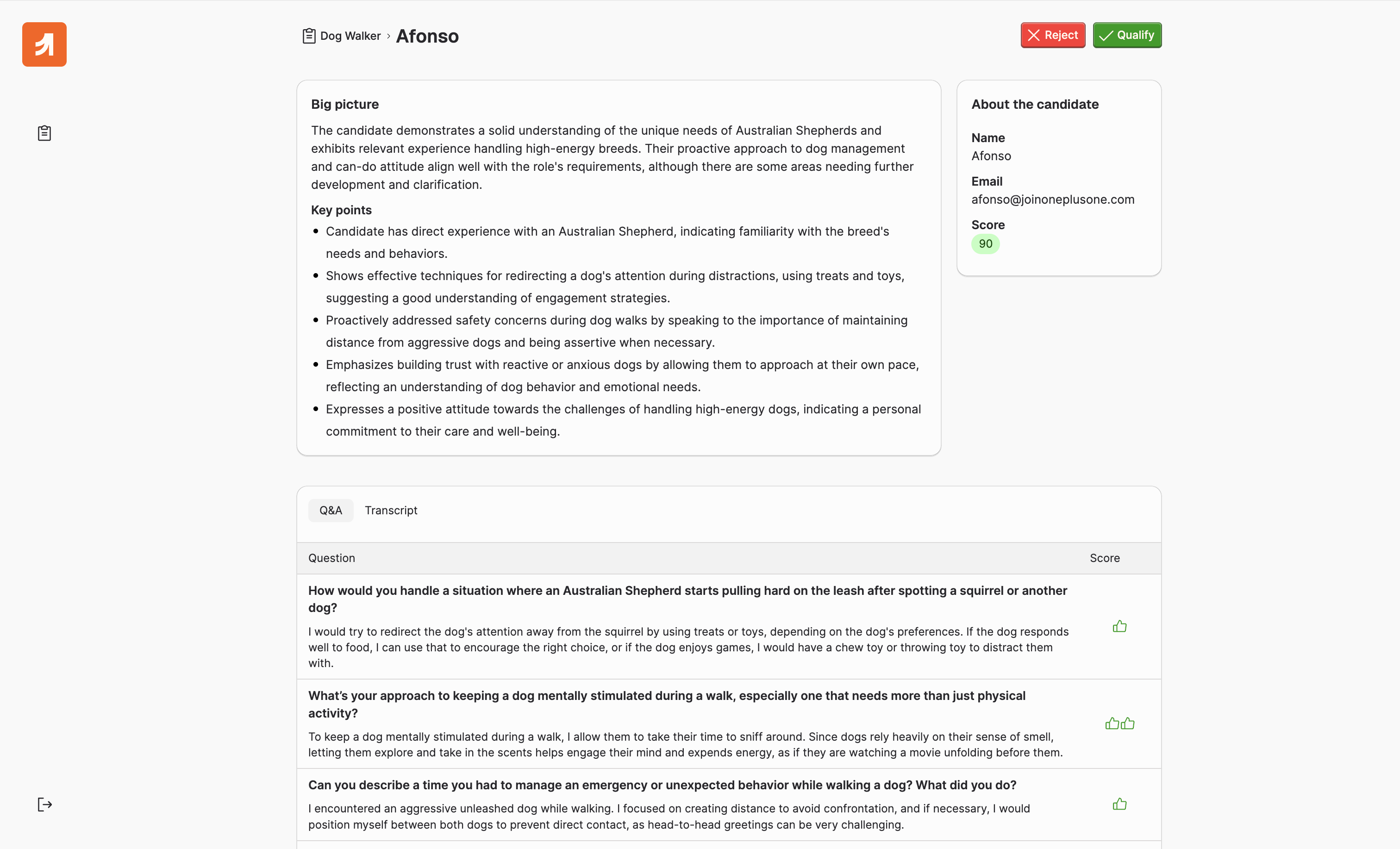
At the same time, we noticed how fast voice agents were becoming more capable, and we also identified that traditional markets were still heavily relying on manual processes for recruiting. For example, factory workers who work the night shift typically have a harder time getting in touch with recruiters, because they keep very different schedules. By giving candidates the ability to interview whenever it's convenient for them, we could significantly increase the number of candidates we could reach and actually surface the best candidates for the role.
My role
I was one of the two technical co-founders of the company, so basically all of the implementation, design, and architecture was a collaboration process. Given my background in user-facing software, I ended up taking the lead on the frontend work. I also led the AI side: figuring out the best way to use the different tools and models available to us, prompting, the best way to do retrieval and everything in between.
The stack
The platform has a split frontend/backend architecture: SvelteKit for the frontend and Phoenix (Elixir) for the backend. We hosted the platform on GCP and Fly.io, with Postgres as our database and Cloud Run for deployments.
For our interview assistant, we used Recall.ai for interview recordings and calendar sync. We handled transcription with AssemblyAI and used Unified for ATS integrations. Depending on the use case, our interview analysis and assistant features are powered by OpenAI or Gemini.
For our AI voice interviews, we used Vapi to manage calls, Sesame's models for TTS, Deepgram for STT, and OpenAI once again for fast, structured analysis.
What I learned
This was my first time starting something for myself and building it from the ground up. The amount of things I had to learn on the fly was immense. Coming from a background of iOS development, where things are not constantly changing, having to learn about different tools and actual paradigms for building software was quite a lot.
The tech-side aside, being a founder is in itself a lot of learning. It's a lot of trial and (mostly) error. Having to find the social battery to keep engaging with people and potential customers was something I never had to do before, and honestly way out of my comfort zone.
But being on calls with early users and seeing the impact of what we were building was incredibly rewarding. It was a great feeling to see the potential of the platform and how it could help people. Plus, getting to work with my friends once again was a blast.